

Night guards and clear retainers can look alike, but their main jobs differ. A night guard helps protect teeth from grinding and clenching. A retainer helps maintain tooth position after orthodontic treatment.
If you have straightened your teeth and also grind at night, both concerns matter. Choosing an appliance requires more than comparing thickness or appearance.
At Elgin Smiles, we begin with your symptoms, dental findings, and orthodontic history. An evaluation helps determine what needs protection and how to preserve any existing retention plan.
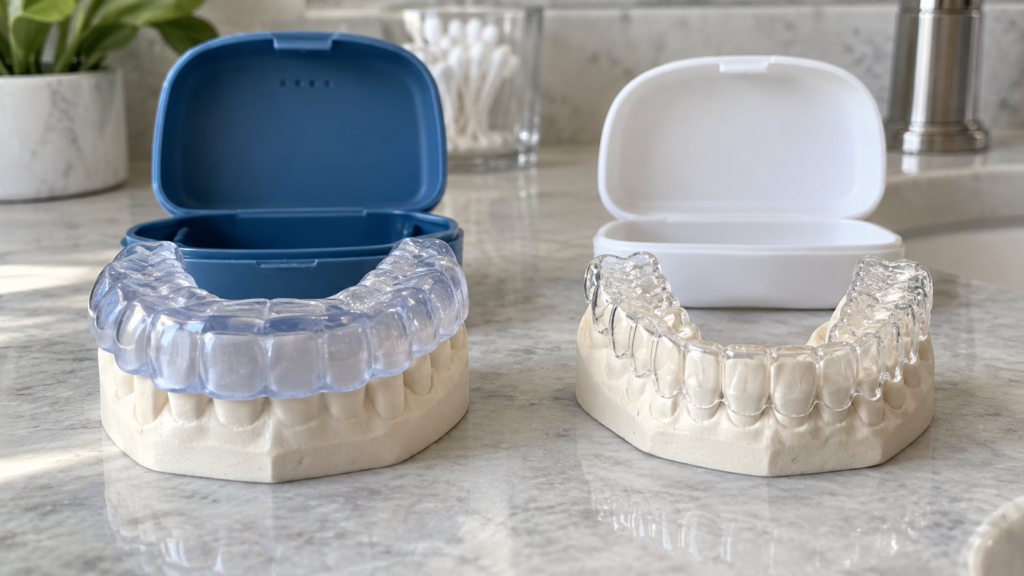
Night Guard vs. Retainer: A Quick Comparison
This comparison focuses on removable clear retainers. Other retainer types exist, and appliance materials and thickness vary.
| Feature | Night guard | Clear retainer |
| Main purpose | Helps protect teeth from grinding and clenching | Helps maintain tooth alignment |
| Typical use | Selected patients with bruxism and related dental risks | Retention after braces or clear aligners |
| Design priority | Protective material, fit, and biting contacts | Close fit around teeth in their intended positions |
| Planned tooth movement | Not intended to straighten teeth | Primarily intended to hold tooth position |
| Wear schedule | Usually during sleep, as prescribed | Individualized, with long-term wear commonly needed |
| Interchangeable? | Should not automatically replace a retainer | Should not automatically replace a grinding guard |
Some appliances can address both needs, but this requires deliberate planning. A close fit alone does not establish that an appliance will perform both functions.
What Does a Night Guard Do?
A night guard places material between the upper and lower teeth during sleep. For suitable patients, it can help limit damage from repeated grinding or clenching, also called bruxism.
A custom night guard is designed around the individual teeth and bite. The dentist checks how it seats and how the opposing teeth contact it.
A guard does not necessarily stop grinding or address every contributing factor. Its protective role should not be described as curing bruxism or guaranteeing relief from headaches or jaw discomfort.
Tooth wear, fractured restorations, sensitivity, or morning muscle soreness may prompt evaluation. These findings are not a diagnosis by themselves, and not everyone who reports them needs an appliance.
Existing cracks or damaged dental work also need assessment. A guard cannot repair a fractured tooth or replace treatment that the tooth requires.
What Does a Clear Retainer Do?
Clear retainers are closely fitted trays used to help maintain tooth position after orthodontic treatment.
Teeth can shift while supporting tissues adapt after treatment and as the mouth changes over time. Retention helps limit unwanted movement.
The wear schedule depends on your treatment history and clinical needs. Some patients begin with substantial daytime and nighttime wear before transitioning to nights. Others receive different instructions.
Retention commonly continues long term, often indefinitely. Do not assume that teeth no longer need support once the initial settling period ends.
If your teeth have moved, a replacement retainer may maintain their current positions rather than restore the previous result. Your dentist can assess whether additional clear aligner treatment or another approach is appropriate.
Can a Retainer Replace a Night Guard?
A clear retainer covers the teeth, but that does not automatically make it suitable protection against significant grinding.
Material, thickness, design, and grinding intensity affect how an appliance performs. Some clear retainers develop cracks, holes, rough edges, or changes in fit under repeated loading.
Repeated damage deserves a conversation with the dental team. Bring the appliance so the dentist can inspect where and how it is wearing.
Avoid choosing a replacement based only on appearance or switching to a store-bought guard without discussing your retention needs. A device that feels comfortable may still leave tooth alignment insufficiently supported.
Can a Night Guard Replace a Retainer?
A night guard may fit closely without being designed to hold every relevant tooth in its orthodontic position.
This matters if only one arch is covered or if the appliance design does not provide the retention your treatment requires. Tell the dentist about previous braces, aligners, bonded retainers, and current removable appliances.
Do not stop wearing a prescribed retainer simply because you receive a night guard. The provider should explain which appliance maintains which teeth and what schedule to follow.
What if You Need Grinding Protection and Retention?
The key question is how to protect teeth while maintaining alignment in the areas that need support.
Some purpose-designed appliances can provide both protection and retention. Whether this approach is suitable depends on your bite, dental work, tooth position, grinding pattern, and orthodontic history.
A coordinated plan may require discussion with your orthodontic provider. It should explain how the relevant upper and lower teeth will be retained, which appliance to wear, and when to use it.
Do not independently alternate appliances, skip prescribed retainer nights, or layer two devices over the same teeth. Combining appliances without a planned design can interfere with fit and biting contacts.
At Elgin Smiles, we can evaluate your concerns and discuss appropriate next steps, including coordination with another provider when needed. A combined appliance should not be assumed suitable or available for every case.
How Does the Dentist Decide What You Need?
An examination connects your symptoms with actual findings. Useful information includes:
- Previous braces or aligners and when treatment ended.
- Your current retainer schedule and any missed wear.
- Grinding sounds, morning soreness, or changes in tooth sensitivity.
- Recent dental work, tooth movement, or appliance damage.
- Any pain, locking, or change in how your teeth meet.
Bring current and damaged appliances, even if you no longer wear them. Their fit and wear patterns can provide useful context.
Headaches and jaw discomfort have several possible causes. Painless clicking alone does not establish bruxism or mean that treatment is needed. Tell the dentist about associated pain or movement limitations.
Our dental exams and cleanings provide opportunities to monitor tooth wear, oral health, and changes over time. A separate appointment may be appropriate for a specific appliance concern.
What Happens When a Custom Appliance Is Made?
When an appliance is recommended, the process generally involves recording tooth shape and the bite, selecting an appropriate design, and checking the finished fit.
Elgin Smiles uses 3D digital impressions for suitable dental applications, including retainers and oral appliances when appropriate. A scan provides information for planning; the clinical evaluation determines how that information should be used.
At delivery, ask the team to show you how to insert and remove the appliance. You should understand its purpose, wear schedule, cleaning instructions, and signs that warrant review.
A custom design allows individual planning and adjustment, but comfort and performance still need monitoring. Let the team know if you cannot wear it as directed.
What if an Appliance Feels Tight or Painful?
A retainer can feel snug, but pain, incomplete seating, or visible distortion should not be ignored. Do not force it into place or try to reshape it with heat.
Contact the prescribing dentist or orthodontist promptly for guidance. The issue may involve tooth movement, appliance damage, or changes after dental treatment.
If a night guard causes new pain, stop using it and contact the dentist. Also report changes in how your teeth meet.
Ask what to use for retention while the appliance is being assessed. Do not assume that stopping an uncomfortable guard also means stopping a separate, properly fitting prescribed retainer.
Caring for Your Appliance
Follow the instructions for your particular material. Cleaning products and storage requirements can differ.
Rinse and clean the appliance as directed, avoid hot water that could distort it, and use the recommended protective case. Keep it away from pets and situations where it can be crushed or lost.
Bring it to recommended checks. There is no universal replacement interval: wear, fit, material, dental changes, and your clinical needs determine when replacement is appropriate.
Frequently Asked Questions
Will a night guard stop me from grinding?
Not necessarily. It may help protect teeth, but management can also involve addressing contributing habits, health factors, or other concerns identified during evaluation.
Can a clear retainer handle heavy grinding?
Not always. Repeated cracking, holes, or distortion should be evaluated rather than repeatedly replacing the same appliance without discussing the cause.
Can I wear a guard and retainer together?
Only follow a professionally coordinated plan. Do not layer appliances over the same teeth or change your retention schedule yourself.
Does a tight retainer mean I need new aligners?
No. The dentist or orthodontist needs to assess fit and tooth position. Adjustment, replacement, monitoring, or further alignment treatment may be considered.
How long will I need a retainer?
Retention usually continues long term and may be indefinite. Your provider should explain the appropriate schedule and review it when circumstances change.
Discuss Your Appliance Needs With Elgin Smiles
The right recommendation depends on whether you need grinding protection, orthodontic retention, or a plan addressing both.
At Elgin Smiles in Elgin, TX, we explain the findings and options so you understand what an appliance is intended to do.
Schedule an Appliance Evaluation and bring any current retainers or night guards. We can review their condition, discuss your concerns, and recommend the next step.
