
Socket Preservation

Serving the Elgin community—Where dentistry feels like family.

Protect Your Jawbone After a Tooth Extraction

When a tooth is removed, the space it leaves behind is called a socket. Without the tooth root in place, the surrounding bone can begin to shrink or change shape as it heals. Socket preservation is a treatment that helps protect the bone after an extraction, especially if you may want a dental implant or other tooth replacement option in the future.

At Elgin Smiles, Dr. Ryan Fahmy provides socket preservation in Elgin, TX, as part of careful, long-term treatment planning. If a tooth needs to be removed, we do not just focus on getting it out. We also think about what your smile will need next.

The goal is simple: help preserve the shape and strength of your jawbone so you have better options for restoring your smile later.

Elgin Smiles Dental Care logo

Need To Schedule OR Have A Question?

Services Form

What Is Socket Preservation?

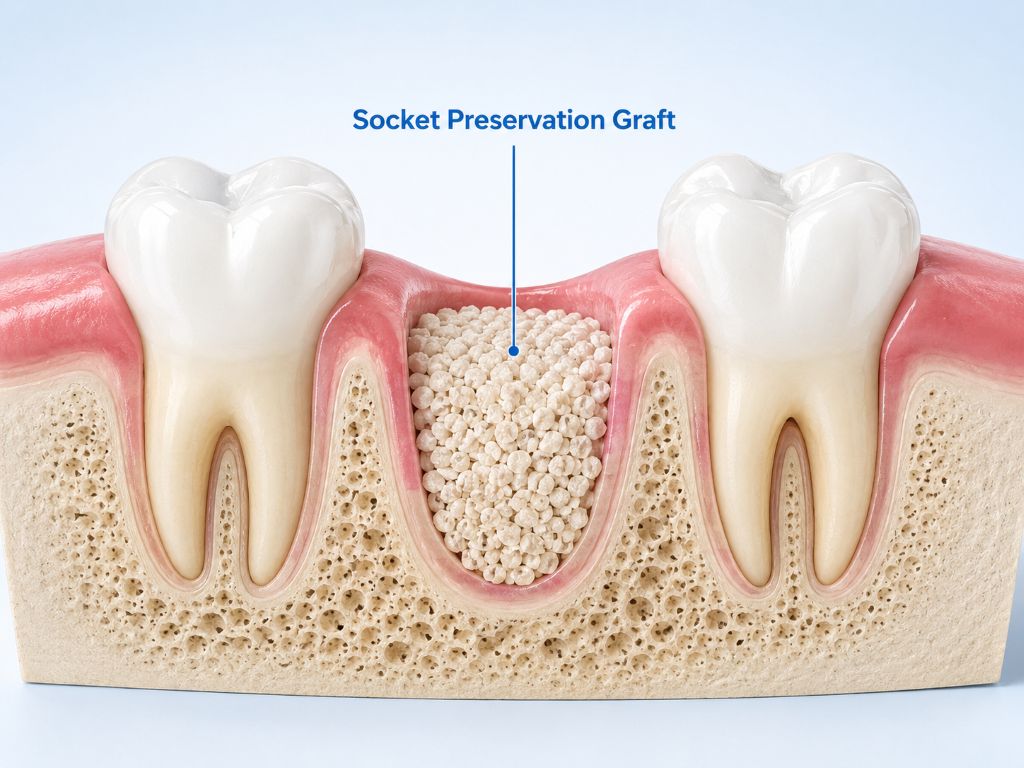
Socket preservation is a type of bone grafting performed at the time of a tooth extraction. After the tooth is removed, bone-supporting material is placed into the empty socket to help maintain the area as it heals.

This does not instantly grow new bone overnight. Instead, the graft material helps support your body’s natural healing process and helps reduce the amount of bone shrinkage that can happen after tooth loss.

Socket preservation may be recommended when:

  • A tooth needs to be removed
  • You may want a dental implant in the future
  • The bone around the tooth is already thin or weakened
  • The tooth has been damaged by infection or trauma
  • The extraction site needs added support for healing
  • Maintaining the gum and bone shape is important for appearance
  • You want to keep future tooth replacement options open

Dr. Fahmy will explain whether socket preservation makes sense for your situation and how it fits into your larger treatment plan.


Why Bone Changes After a Tooth Is Removed

Your jawbone depends on stimulation from tooth roots to stay strong. When a tooth is removed, the bone in that area no longer receives the same pressure from chewing. Over time, the bone can begin to shrink, narrow, or change shape.

This can affect:

  • The shape of your gumline
  • The appearance of your smile
  • The fit of a future dental implant
  • The support for a bridge or denture
  • The amount of bone available for future treatment
  • The long-term stability of nearby teeth

Not every extraction requires socket preservation. However, if you are thinking about replacing the tooth later, protecting the bone now can make future care more predictable.


How Socket Preservation Supports Dental Implants

Dental implants need healthy bone for support. If too much bone is lost after an extraction, placing an implant later may become more difficult or may require a larger grafting procedure.

Socket preservation helps maintain the area after the tooth is removed, which can make future implant planning easier. It may also help preserve the natural shape of the gum and jaw where the final restoration will be placed.

This can be especially important when the missing tooth is in a visible part of the smile or when the bone is already thin.

Socket preservation can help:

  • Maintain bone volume after extraction
  • Support future dental implant placement
  • Reduce the need for more complex grafting later
  • Protect the shape of the gums and jaw
  • Create a healthier foundation for a future crown, bridge, or denture
  • Give you more flexibility when deciding how to replace the tooth

The best time to think about preserving the bone is often when the tooth is being removed.


What to Expect During Socket Preservation

Your visit begins with an exam and clear explanation of why the tooth needs to be removed. Dr. Fahmy may use digital X-rays or 3D CBCT imaging to evaluate the tooth, surrounding bone, nearby structures, and future replacement options.

If socket preservation is recommended, the tooth is removed as gently as possible. After the extraction, bone grafting material is placed into the socket. The area is then protected so it can heal properly.

Depending on your needs, socket preservation may be part of a larger plan that includes:

  • Surgical extraction
  • Bone grafting
  • Future dental implant placement
  • A dental bridge
  • Partial dentures or custom dentures
  • Follow-up imaging to evaluate healing

Before you leave, our team will review your aftercare instructions so you know how to protect the area while it heals.


A Small Step That Can Make a Big Difference Later

Socket preservation may feel like an extra step, but it can be an important part of protecting your future smile. Once bone is lost, rebuilding it later may take more time, more treatment, and more planning.

By preserving the socket at the time of extraction, we may be able to reduce future complications and help keep more treatment options available.

This is especially helpful if you are not ready to decide on a dental implant right away. Socket preservation can help protect the area while you take time to plan the next step.


Comfortable, Carefully Planned Care

We understand that tooth removal and grafting can sound intimidating. At Elgin Smiles, we focus on making the process feel calm, clear, and manageable.

Dr. Fahmy takes time to explain what he sees, why socket preservation may be recommended, and what it means for your long-term oral health. You will never be rushed into treatment without understanding the reason behind it.

During your visit, you can relax in a massaging chair, watch your favorite show on our ceiling-mounted TVs, and ask questions before treatment begins. Our goal is to make oral surgery feel less overwhelming and more personal.


Healing After Socket Preservation

Healing time can vary depending on the tooth, the condition of the bone, and your overall treatment plan. Some soreness, tenderness, or swelling can be normal after an extraction and grafting procedure.

After socket preservation, we may recommend that you:

  • Rest for the remainder of the day
  • Avoid drinking through a straw
  • Stick with soft foods during early healing
  • Keep the area clean as instructed
  • Avoid smoking or vaping while the area heals
  • Take medications as directed
  • Return for follow-up visits if recommended
  • Call us if pain, swelling, bleeding, or other symptoms seem unusual

Our team will make sure you understand how to care for the area and what to expect as it heals.


Clear Costs Before Treatment Begins

Socket preservation may be recommended as part of an extraction, implant plan, or larger restorative treatment plan. Before moving forward, our team will explain what is included and review your estimated cost.

At Elgin Smiles, we help make the financial side of care easier with:

  • Insurance support to help review available benefits
  • Upfront estimates before treatment begins
  • Flexible payment options through Cherry and CareCredit for qualifying patients
  • Clear treatment planning from Dr. Fahmy, so you understand why socket preservation is recommended

No vague pricing. No surprise bills. Just clear guidance before you make a decision.


Socket Preservation in Elgin, TX

You do not have to drive into Austin for thoughtful extraction planning or bone preservation care. Elgin Smiles provides socket preservation right here at 1309 N Avenue C, convenient for patients from Downtown Elgin, Harvest Ridge, Silo Ranch, Eagle’s Landing, County Line, Lund & Kimbro, and the surrounding 78621 area.

If you need a tooth removed and want to protect your future replacement options, schedule a visit with Elgin Smiles. Dr. Fahmy can evaluate the tooth, explain whether socket preservation is recommended, and help you plan the next step with confidence.

reviews

What Our Patients Say

Say goodbye to dental anxiety! We offer a range of comfort options to ensure your visit is as relaxing as possible. However, comfort isn’t just about the experience but your overall health. Our focus goes beyond treating teeth; we prioritize your oral health for a lifetime of smiles.