

A large filling can restore a tooth affected by significant decay or damage, but the tooth may feel different afterward.
Some people notice sensitivity to cold or heat, discomfort while chewing, or an occasional ache. How the tooth responds can depend on its condition before treatment, how deep the original cavity was, and how much tooth structure was involved.
So, why does a tooth hurt after a large filling?
There is not one answer for every tooth. Sometimes the tissues inside the tooth were already irritated before treatment. The restorative procedure itself can also leave the area temporarily sensitive. In other cases, continued discomfort may mean the tooth or restoration needs to be evaluated again.
The important thing is not to assume that pain automatically means the filling failed or that another procedure is necessary.
Why Can a Large Filling Cause Tooth Pain?
A filling replaces tooth structure affected by decay or damage.
When a restoration is relatively large, more of the tooth has usually been involved. A deeper cavity may also extend closer to the inner portion of the tooth, where sensitive tissues are located.
If the original decay was deep, those tissues may already have been irritated before the filling was placed.
The tooth also goes through several steps during restorative treatment. The affected structure must be removed, the area prepared, and the restoration placed. Depending on the tooth and the extent of treatment, it may feel more sensitive afterward.
The size of the filling alone does not determine what will happen next. A large restoration does not automatically mean the tooth will remain painful, need root canal therapy, or require a crown.
If you want to learn more about how these restorations are used, our tooth-colored fillings page explains their role in repairing damaged or decayed teeth.
What Does Sensitivity After a Filling Feel Like?
Post-filling sensitivity can feel different from one patient to another.
Some people notice a brief response to cold drinks or foods. Others may feel sensitivity to heat or mild discomfort when chewing.
The restored tooth may also simply feel different from the surrounding teeth at first.
What matters is how the symptoms behave over time.
Pay attention to whether the discomfort is becoming less noticeable, remaining about the same, or becoming more intense. Symptoms that persist, worsen, or begin interfering with normal eating deserve further evaluation.
Why Does a Tooth Hurt When Biting After a Filling?
Pain when biting can have several possible causes.
Sometimes the way a newly restored tooth contacts the tooth above or below it can contribute to discomfort. If the bite feels different after treatment, additional pressure may be placed on the restored area during chewing.
Biting pain can also be related to the condition of the tooth itself, the depth of the original decay, or irritation involving the inner tissues of the tooth.
The symptom alone cannot tell you which explanation applies.
If a tooth continues to hurt when you bite down or chew, it is better to have the area evaluated rather than trying to determine the cause yourself.
When Should You Contact Your Dentist?
Contact your dentist when tooth pain after a filling is persistent, worsening, significant when biting, or interfering with eating and other normal activities.
An evaluation does not automatically mean another procedure will be necessary.
Your dentist can ask when the pain occurs, what triggers it, and whether it has changed since treatment. The tooth and restoration can then be examined directly.
Diagnostic tools may also be useful depending on the situation.
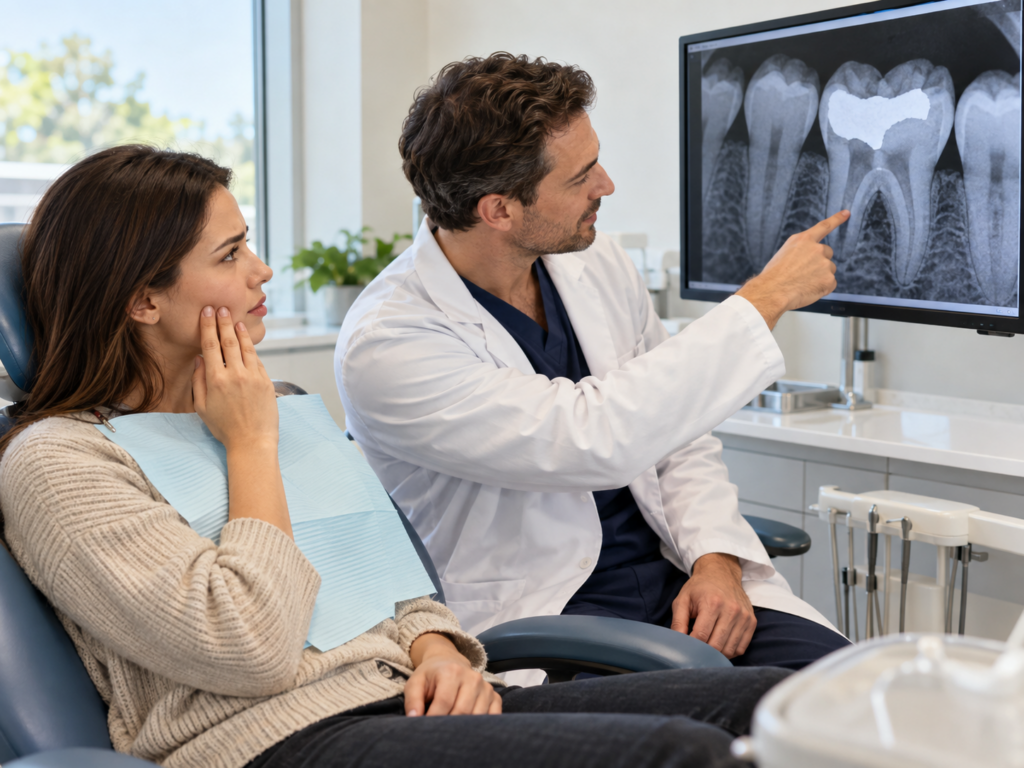
For example, digital X-rays can provide information about areas that cannot be fully assessed through a visual examination alone.
The goal is to determine what may be contributing to the symptoms before deciding whether any additional treatment is appropriate.
Does Pain After a Large Filling Mean You Need More Treatment?
Not necessarily.
Post-filling pain can have several possible explanations, so the presence of discomfort does not by itself determine the next step.
Root Canal Treatment
Sensitivity after a large filling does not automatically mean you need root canal therapy.
Root canal treatment may be considered when the inner tissues of a tooth have been significantly affected and are unable to recover appropriately. Determining whether that has occurred requires an individual evaluation.
We provide root canal therapy when it is appropriate for the condition of the tooth. The decision should be based on clinical findings rather than symptoms alone.
Dental Crown
A large filling also does not automatically mean the tooth needs a crown.
A filling replaces the damaged portion of a tooth, while a crown covers a larger part of the tooth.
A crown may be considered when the remaining tooth structure needs broader protection, but that decision depends on factors such as how much healthy structure remains, the location of the tooth, its condition, and the forces placed on it during normal function.
We also provide dental crowns when broader restoration is appropriate.
Filling Adjustment or Replacement
Sometimes the restoration itself may need to be adjusted, repaired, or replaced.
That does not mean every painful filling is defective.
The dentist needs to consider how the restoration fits, how the tooth responds to pressure, the condition of the remaining tooth structure, and whether another issue could explain the symptoms.
Replacing a filling without understanding the cause of the pain is not automatically the right solution.
How Does a Dentist Evaluate a Painful Tooth After a Filling?
The evaluation usually begins with your symptoms.
Your dentist may ask when the discomfort started, what triggers it, whether it lingers, how the tooth feels when biting, and whether the symptoms have changed since the filling was placed.
The tooth and surrounding area can then be examined.
Depending on the findings, additional diagnostic tools may help.
A digital intraoral camera can provide close-up images of the tooth and restoration, which may also help patients better understand what the dentist is seeing.
Digital imaging may also provide information when the cause of discomfort is not obvious during the clinical examination.
At our practice, the goal is to listen to what you are experiencing, evaluate the tooth carefully, and explain the findings before recommending what happens next. This reflects Elgin Smiles’ patient-first approach to personalized treatment planning and clear communication.
What Can You Do While Monitoring the Tooth?
Follow any instructions provided after your filling and pay attention to how the tooth feels.
It can be helpful to notice:
- whether cold or heat triggers sensitivity
- whether the pain occurs mainly while biting
- whether discomfort fades quickly or continues
- whether symptoms are becoming better or worse
- whether the tooth interferes with normal eating
This information can be useful if you need to return for an evaluation.
Avoid trying to diagnose the tooth based on one symptom. Several different dental problems can feel similar, and the appropriate next step depends on what the examination shows.
When Tooth Pain After a Filling Needs an Evaluation
A tooth that hurts after a large filling can have several possible explanations.
The depth of the original decay, the amount of tooth structure involved, how the bite feels, and the condition of the tooth’s inner tissues can all influence symptoms.
Most importantly, discomfort does not automatically mean that the filling failed, that the tooth needs root canal therapy, or that a crown is required.
At Elgin Smiles, we focus on understanding what the tooth is telling us before recommending additional care. Our restorative services include tooth-colored fillings, crowns, root canal therapy, and diagnostic technology that can support evaluation when appropriate.
If your tooth continues to hurt, becomes more painful, or causes significant discomfort when biting, contact Elgin Smiles to schedule an evaluation.
